If you want Hill Country scenery without feeling far from everyday essentials, Bee Cave is one of the most practical places to look. It offers a mix of shopping, dining, trails, and housing options in a setting that still feels connected to the natural landscape. If you are weighing a move to West Austin or the Lake Travis area, understanding how Bee Cave actually lives day to day can help you decide if it fits your goals. Let’s dive in.
Why Bee Cave Stands Out
Bee Cave is often described as a gateway between downtown Austin and the lakes, and that framing fits the city well. According to the City of Bee Cave, the area sits between SH 71, RM 620, and Bee Caves Road, with a balance of residential neighborhoods, offices, retail, and outdoor recreation.
That balance is a big part of Bee Cave’s appeal. You are not choosing between convenience and scenery in quite the same way you might in other Hill Country communities. Bee Cave feels more compact and amenity-rich, while still offering trails, views, and a strong Hill Country identity.
The city’s current snapshot highlights 157 retail shops, 74 restaurants, 11 miles of trails, and year-round events. Bee Cave’s population was 9,144 in the 2020 Census, which helps explain why it can feel established and active without feeling overly large.
Daily Life in Bee Cave
Shopping and errands
For many residents, daily convenience revolves around the Hill Country Galleria area. The city’s retail development map shows a concentrated mix of destinations near the SH 71 and RM 620 corridor, including Hill Country Galleria, Shops at the Galleria, H-E-B Plaza, and the Target and Home Depot area.
That concentration matters in real life. Instead of driving all over the region for routine errands, many day-to-day needs can be handled close to home. For buyers relocating from other parts of Austin or from out of state, that often makes Bee Cave feel easier and more efficient than farther-out Hill Country options.
Dining and casual outings
Bee Cave also works well if you like having places to meet friends, grab dinner, or run out for a quick coffee without committing to a longer drive. The city’s commercial core supports a more connected lifestyle than you might expect in a suburban Hill Country setting.
The result is a town that feels active throughout the week, not just on weekends. That can be especially appealing if you want a polished suburban environment with built-in convenience.
Parks and Trails in Bee Cave
Trail access is a real lifestyle feature
Outdoor access is one of Bee Cave’s strongest quality-of-life advantages. The city’s trail system page outlines a network that includes the Bee Cave Hike and Bike Trail, which runs from Falconhead Boulevard south along 620 to Central Park and then to the Galleria.
This is not just a decorative trail system. The city says it has completed 11 miles of trails, which reinforces that walking, biking, and outdoor movement are part of Bee Cave’s day-to-day identity.
Central Park and Primitive Park
Bee Cave Central Park is a 50-acre park southwest of RR 620 South and Bee Cave Parkway. The perimeter trail is just over 1 mile, and the park includes practical amenities like restrooms, water fountains, a dog park, and shaded play structures.
If you prefer a more rugged outdoor experience, Bee Cave Primitive Park offers varied-surface hiking, semi-technical mountain biking, and Hill Country views. It has fewer amenities, but that more natural feel is part of the appeal.
Walkability has limits
Bee Cave is walkable in certain pockets, especially around the Galleria and Central Park. The city’s connectivity plan shows that the trail network is intended to connect neighborhoods, parks, schools, retail, restaurants, and offices.
At the same time, the plan also notes challenges like highway crossings, topography, and built-out neighborhoods. In practical terms, Bee Cave supports local walking and biking well in some areas, but it still functions as a car-first community for broader regional movement.
Commuting and Getting Around
Bee Cave’s location is one of its biggest selling points, but commute expectations should stay realistic. You are well positioned for West Austin, the Lake Travis area, and other Hill Country destinations, yet traffic patterns still matter.
The U.S. Census Bureau estimates the mean travel time to work at 22.1 minutes. That number is useful as a general benchmark, but actual drive times will vary quite a bit depending on where you work and when you leave.
The city’s community information and recent transportation updates also point to the importance of the Hwy 71 corridor. Bee Cave remains highly convenient, but not disconnected from regional congestion. If commute quality is a top priority, it helps to evaluate specific routes rather than relying on a single citywide average.
Bee Cave Housing and Home Styles
The market sits at the upper end
Bee Cave’s housing profile is clearly positioned toward the upper end of the Austin metro. The Census Bureau reports a median owner-occupied home value of $776,400, and the same source estimates an owner-occupied housing rate of 48.8%.
For buyers, this points to a market where quality, location, and neighborhood setting can have a meaningful impact on pricing. It also means Bee Cave tends to attract buyers who are looking for more than basic square footage.
Housing types and community patterns
Bee Cave is not limited to a single housing format. Research in the report notes that listings commonly include single-family homes, townhomes, and condos or co-ops, which gives buyers some flexibility depending on lifestyle and budget.
The city’s planned development district map shows a mix of areas tied to Falconhead, Ladera, Spanish Oaks, The Pearl Bee Cave, Bee Cave Crossing, and the Hill Country Galleria area. In practice, that creates several distinct pockets rather than one uniform residential experience.
Design trends buyers notice
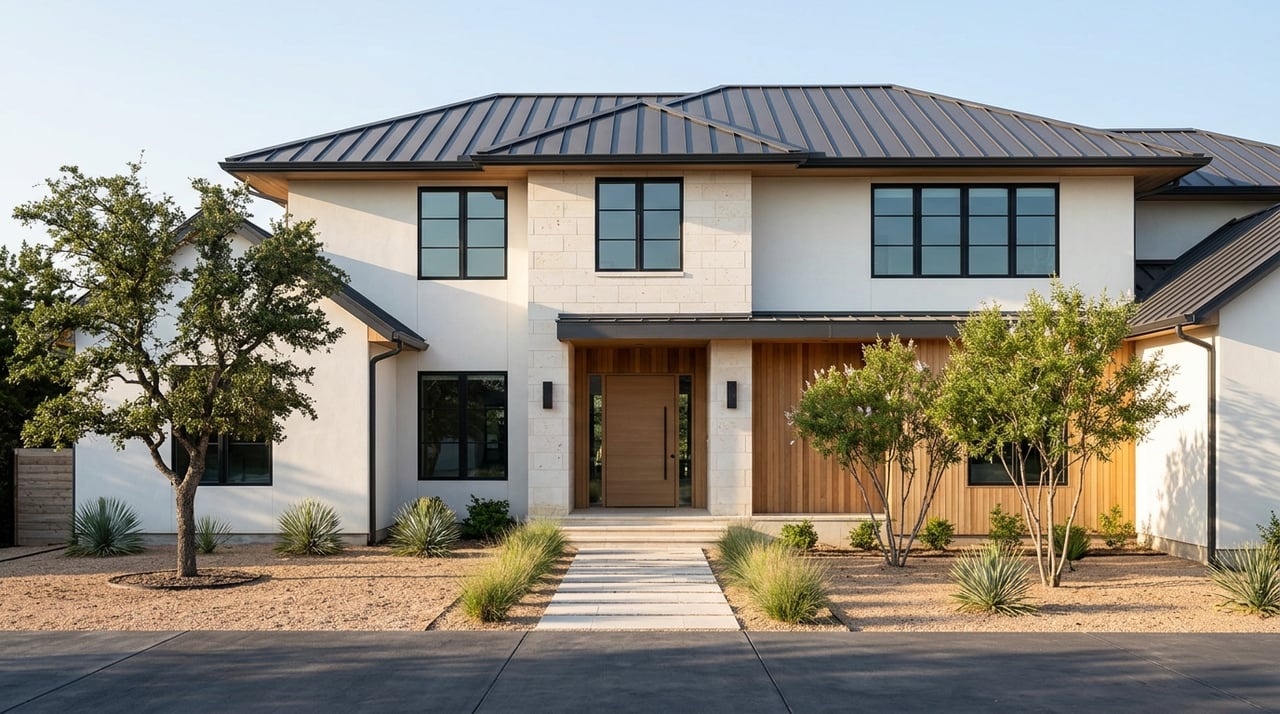
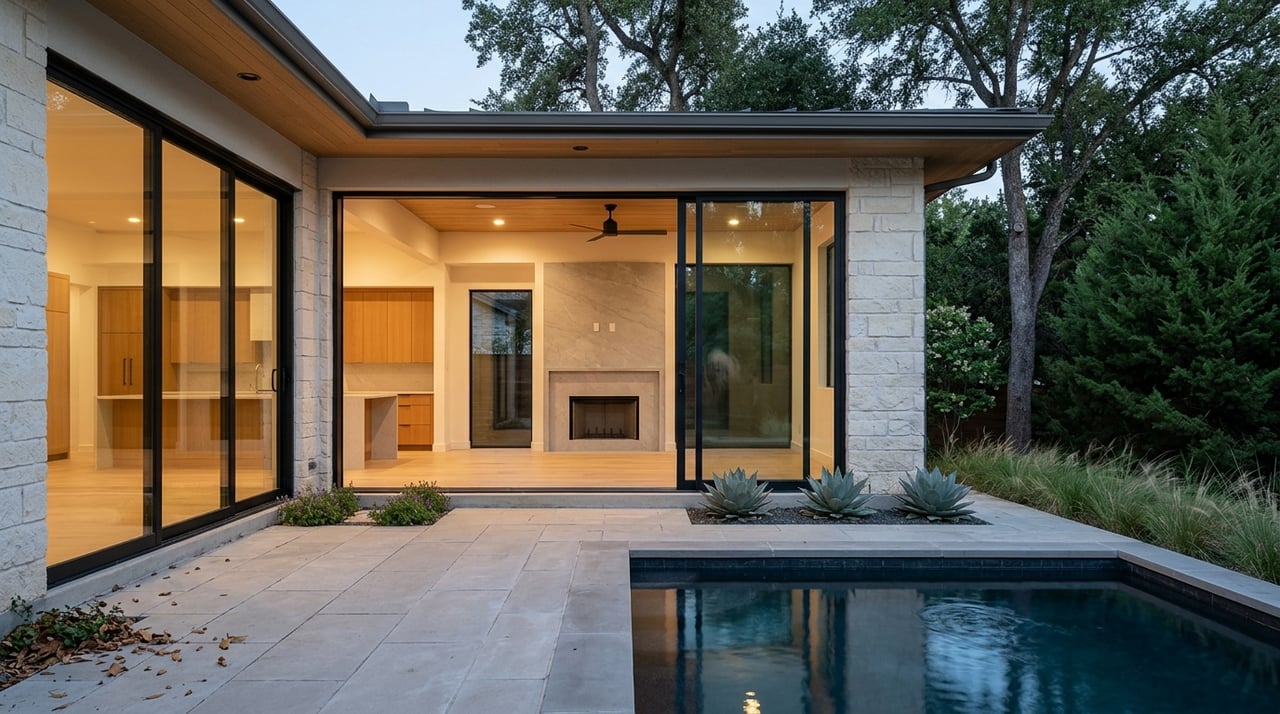
If you care about architecture, materials, and long-term livability, Bee Cave has a lot to offer. Current listings referenced in the research report suggest common design themes such as Hill Country contemporary, Spanish or Mediterranean influence, and modern-ranch styling.
You will often see features like open-concept layouts, large windows, natural stone, outdoor living areas, and view-oriented floor plans. For design-conscious buyers, that makes Bee Cave especially appealing because the market often rewards thoughtful construction and strong site placement.
Schools and Local Context
Bee Cave is served by Lake Travis ISD, which describes itself as a 6A district about 20 miles west of Austin. The district lists Bee Cave Elementary School and Bee Cave Middle School among its campuses.
If schools are part of your home search, it is wise to verify attendance boundaries and current district information before making a decision. Boundaries and campus assignments can change over time, so current confirmation is always the best approach.
Who Bee Cave Fits Best
Bee Cave tends to work especially well for buyers who want a polished home environment with easy access to retail, dining, and outdoor recreation. It can also be a strong fit if you want Hill Country character without moving too far from Austin’s core employment and lifestyle hubs.
From a housing perspective, the area often appeals to design-conscious move-up buyers, relocators, and people who care about build quality, privacy, views, or custom-home potential. If you are comparing communities, Bee Cave stands out for its mix of convenience and setting.
What to Consider Before You Move
No market is perfect for everyone, and Bee Cave is no exception. Before you make a move, it helps to think through a few practical questions:
- How important is quick access to shopping and dining?
- Do you want trail access for regular outdoor routines?
- How much will your commute depend on Hwy 71 or RM 620?
- Are you looking for a move-in-ready home, a design-forward resale, or land for a future custom build?
- Do you prefer a retail-adjacent setting or a more tucked-away neighborhood feel?
Those details matter because Bee Cave offers more than one lifestyle lane. The right fit often comes down to how you balance convenience, design, setting, and access.
If you are exploring Bee Cave and want help evaluating not just price, but also layout quality, construction details, and long-term potential, connecting with Allen Auth can give you a more informed way to narrow your options.
FAQs
Is Bee Cave, Texas, walkable for daily life?
- Bee Cave is walkable in select areas, especially near the Galleria and Central Park, but most residents still rely on a car for broader trips across the area.
What is Bee Cave, Texas, known for?
- Bee Cave is known for combining Hill Country scenery with a concentrated mix of shopping, dining, trails, and residential communities.
What types of homes are common in Bee Cave, Texas?
- Buyers will find a mix of single-family homes, townhomes, and condos, with many homes showing Hill Country contemporary, Spanish-influenced, or modern-ranch design elements.
How expensive is living in Bee Cave, Texas?
- Bee Cave is considered an upper-end market in the Austin area, with the Census Bureau reporting a median owner-occupied home value of $776,400.
Which school district serves Bee Cave, Texas?
- Bee Cave is served by Lake Travis ISD, which includes Bee Cave Elementary School and Bee Cave Middle School among its campuses.