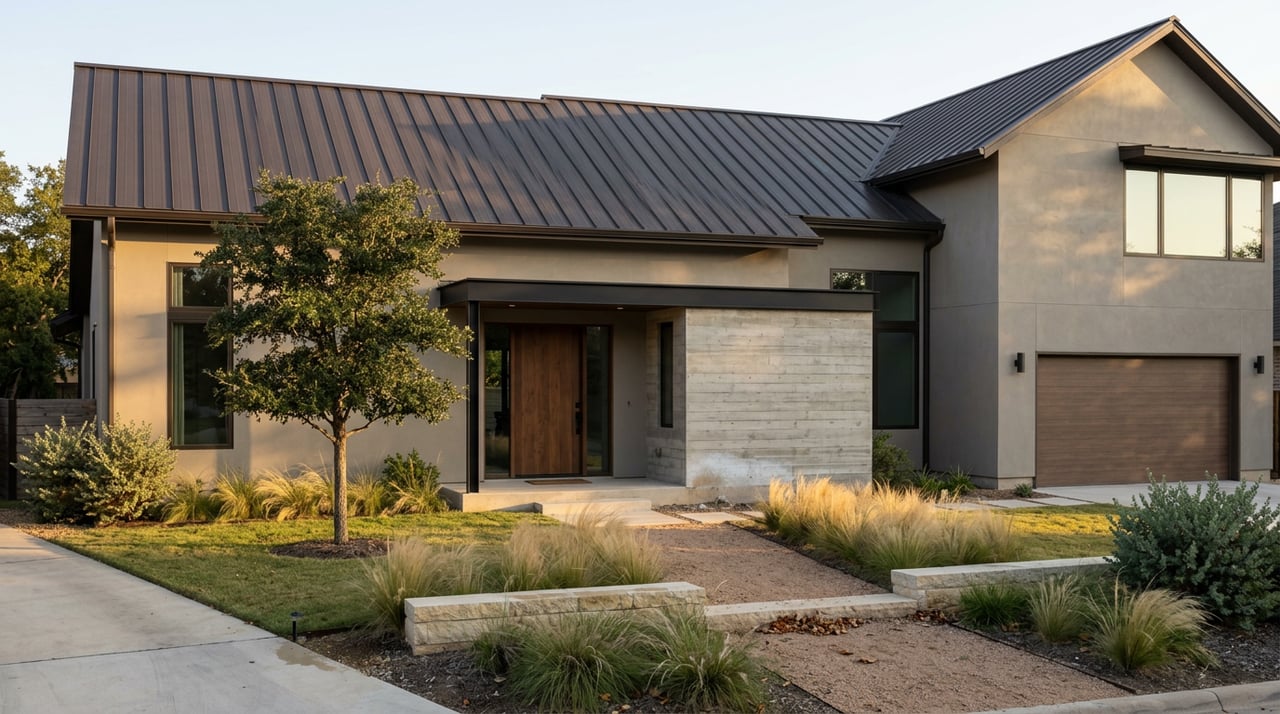
Buyers shopping in Liberty Hill this year keep running into the same surprise at the title company. Two homes, same price, same closing timeline, and suddenly one buyer is signing an extra disclosure form the other never sees. That form is the tell. It means the house sits inside a Municipal Utility District or a Public Improvement District, and it means the tax bill on that house will not match the one next door, even if both homes cost exactly the same.
This is not a technicality that only matters to accountants. It is the single biggest reason two comparably priced Liberty Hill homes can carry a monthly payment that differs by hundreds of dollars, and it is getting more relevant, not less, as the city keeps approving new master-planned communities.
The average rate hides the real variance
Liberty Hill's overall effective property tax rate has been reported around 1.72 percent as of April 2026, a figure that blends every parcel in the city into one number. That blended figure tells you almost nothing about what a specific address will actually cost, because it doesn't separate homes that sit inside a MUD or a PID from homes that don't.
Take Santa Rita Ranch, one of Liberty Hill's largest and best known communities. A 2024 community tax sheet for the development listed a combined rate of $2.464614 per $100, broken out like this:
| Taxing entity (Santa Rita Ranch parcel) | Rate per $100 |
|---|---|
| Williamson County | $0.333116 |
| Liberty Hill ISD | $1.169200 |
| Williamson Co. ESD #4 (fire) | $0.067969 |
| Williamson Co. FM/RD | $0.044329 |
| Williamson Co. MUD #19B/19G | $0.850000 |
| Combined | $2.464614 |
The MUD line alone, $0.85 per $100, is larger than the county tax and the fire district combined. It is not a rounding error. It is the largest single-purpose line item on the bill after the school district.
Apply that gap to the citywide median home price of roughly $510,000 as of April 2026, purely as an illustration, and the difference between paying the city's blended average rate and paying the 2024 Santa Rita Ranch combined rate works out to something like $3,800 a year, or roughly $315 a month added to a mortgage payment that an advertised average rate would never have flagged. Individual district rates shift as bonds get repaid, so treat the exact figure as illustrative rather than a quote for a specific parcel today, but the shape of the gap between a blended citywide average and a MUD-covered section is the point worth remembering.
HOA dues are not the same bill
One more thing that gets flattened into "extra costs" during a search: the same 2024 community tax sheet listed a homeowners association fee of $285 per quarter for Santa Rita Ranch. That fee is separate from the MUD tax. The HOA is a private organization funding amenities and upkeep inside the development. The MUD is a government entity with taxing authority, created specifically to build and repay bonds for water, sewer, and drainage infrastructure. Confusing the two means underestimating your real carrying cost, because you're accounting for one and forgetting the other.
Liberty Hill has more than one of these, and they're not identical
Liberty Hill's special-district history didn't start with Santa Rita Ranch. The city established its first Public Improvement District, Liberty Parke, back in January 2017. The Liberty Hill Independent reported that the city's second PID, Summerlyn West, followed later, authorizing $7.5 million in bonds for a 95-acre parcel south of County Road 263 and west of Eagle Owl Loop, with proceeds earmarked for parks, water and wastewater infrastructure, streets, and signage. A third, Butler Farms, shows up in the city's own 2024 financial audit as an active PID fund with its own balance sheet.
Each of these was created for a different property, at a different time, with a different bond schedule. There is no single "Liberty Hill PID rate." There is a specific rate for a specific parcel, and it only shows up once you know which district, if any, sits under the address you're looking at.
The city eventually formalized how it evaluates new PID requests, adopting its first written PID policy through Resolution 2023-R-003 on January 25, 2023. That policy exists precisely because the number of these districts kept growing and the city needed consistent guidelines for weighing new ones.
The disclosure you're entitled to, and when you should see it
Texas law requires sellers to tell buyers if a property sits inside a PID before a sales contract is signed. Under Section 5.014 of the Texas Property Code, effective since September 1, 2021, that disclosure typically comes as a separate document, an Addendum Containing Notice of Obligation to Pay Improvement Districts. For a Santa Rita Ranch purchase, for example, Santa Rita Ranch says the seller is responsible for delivering a separate MUD notice form to the buyer before the contract is signed.
If you're comparing two Liberty Hill listings and only one comes with this paperwork, that's your signal the tax pictures aren't equivalent, no matter how close the list prices are.
Why the two districts behave differently over time
MUD tax rates tend to decline as a district's construction bonds get paid down, typically over a window of ten to twenty years, which means a newer section of a MUD-covered development will usually carry a higher effective rate than an older, more established section of the same district. PID assessments work on a different clock.
That distinction matters when you're deciding between two homes. A MUD rate you see today is not necessarily the rate five years from now.
More districts are coming, not fewer
Williamson County commissioners recently approved the first phase of Freely, a new 764-acre master-planned community from Houston-based Johnson Development Corp, planned for more than 1,800 homes with the first two phases covering 311 single-family lots. The Austin American-Statesman quoted the company describing its interest in the area this way:
"Close enough to enjoy Austin but far enough away to have an authentic Hill Country vibe."
Liberty Hill's population climbed from 3,680 residents in 2020 to an estimated 15,377 in 2026, and that pace of growth is exactly the condition that produces new MUDs and PIDs. Developers use them to fund infrastructure ahead of city services catching up. Presales at Freely aren't expected until fall 2027, with a grand opening targeted for 2028, but the pattern is already established: as Liberty Hill keeps approving large-scale communities, buyers will keep running into new districts they've never had to research before.
What to ask before you write an offer
- Which specific MUD or PID, if any, applies to this exact parcel, not just the subdivision name on the listing
- What the current combined rate is, and whether that figure is published somewhere you can verify independently
- Whether the district's bond schedule is public and when the debt is expected to be retired
- Whether the HOA fee is separate from, or in addition to, any district assessment
None of these questions require a law degree. They require knowing that the list price and the tax bill are two different documents, and that in Liberty Hill, the gap between them is wide enough to change your monthly budget.
A few common questions
What's the actual difference between a MUD and a PID? A Municipal Utility District is a government entity that levies its own property tax to fund water, sewer, and drainage infrastructure. A Public Improvement District funds a narrower set of neighborhood-specific improvements, like parks, streets, and landscaping.
Does the MUD tax ever go away? It typically declines as the district's original construction bonds get paid down, usually over a ten to twenty year window, though the pace varies by district and isn't guaranteed on a fixed schedule.
Is this only a new-construction issue? Mostly, yes. MUDs and PIDs are created to fund infrastructure for developments built outside existing city service areas, which is why they cluster in newer sections of town rather than older, already-serviced neighborhoods.
How do I find out which district covers a specific address before I make an offer? Ask directly rather than assuming the subdivision's marketing materials cover it. The seller disclosure requirements exist for exactly this reason, but you shouldn't have to wait until contract signing to know.
If you're weighing two Liberty Hill listings and the tax math isn't adding up the way the price alone would suggest, that's worth a conversation before you write an offer, not after. Allen Auth has spent years reading these community tax sheets alongside the architecture and construction details that come with new builds in this market, and can walk through what a specific address will actually cost before you commit to it. Explore more on the Liberty Hill neighborhood page or reach out directly to talk through your search.
This article is general information, not legal, tax or financial advice. Consult a qualified professional about your situation.